









The Rodent Highway: Why Exclusion Work Requires Expert Eyes in Multi-Family Properties

Written by
Derek WhitneyA Hackensack apartment building case study reveals how one overlooked detail kept mice coming back.
Property managers know the call: "I'm still seeing mice."
The tenant's frustrated, you're scrambling to fix it, and half the time the real problem is something most techs walk right past. We had a service call at a property in Hackensack that really drove this point home. The tenant had already seen two different pest control companies over multiple visits. Treatments happened, traps were set, but mice kept showing up. Our technician walked in and spotted the issue in under five minutes—something the previous two companies had completely missed.
The Black Smudges Nobody Noticed
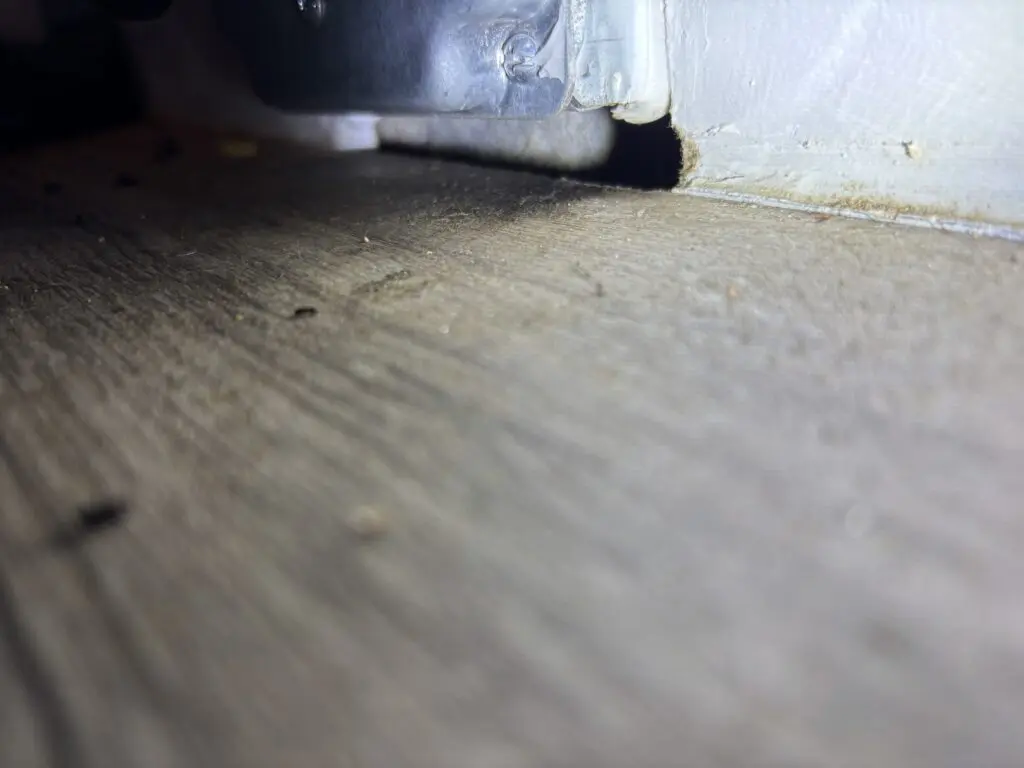
Rodent exclusion is genuinely difficult work. It's easy to miss critical details even when you think you're being thorough. Our technician did what experienced techs know to do—he looked past the obvious problem areas and checked the spots most people overlook. There it was: distinct black smudges running along the baseboards and floor edges throughout the unit. A rodent highway, plain as day once you knew what to look for.
Those marks are called sebum trails. They come from the natural oils mice produce on their fur. When rodents travel the same routes constantly—and they absolutely do—those oils stain everything they brush against. You end up with dark marks on walls and smudges along floor edges. It's essentially a map of exactly where they're traveling through the space.
"With rodent exclusion you can miss spots very easily," our technician explained. "This tenant started seeing mice past two services with different techs. After my first inspection within the general area I found the rodent highway. Notice the black marks which is sebum mice produce on their fur and it stains the walls and floor in a mice highway."
Once you find the highway and trace it back to its source, you can identify the actual entry points. Then you can seal what matters instead of just guessing at random gaps around the building.
Why Most Exclusion Work Falls Short
Here's the fundamental challenge: mice can squeeze through openings as small as a dime. That's about a quarter-inch gap. Young rats need only slightly more room—an opening about the size of a quarter will do just fine.
Now think about an older apartment building for a minute. How many quarter-inch gaps exist throughout that entire structure? We're talking hundreds of potential entry points, maybe thousands depending on the building's age and condition.
Common entry points include gaps around pipes coming through walls and the space under doors that lack proper sweeps. Foundation cracks that nobody's noticed. Openings around HVAC installations. Damaged weather stripping that looks fine from a distance. And those awkward spots where different building materials meet—brick to siding, concrete to wood, that sort of thing. Apartment buildings create challenges that single-family homes simply don't have. Mice don't respect unit boundaries at all. If there's a problem in apartment 2B, those rodents are traveling through shared walls to units 2A, 2C, and 3B within a week or two. They use ceiling voids like highways. They treat plumbing chases like interstate systems. They move freely through the building's infrastructure.
The Hackensack property demonstrates exactly why incomplete exclusion work keeps failing. You can seal nine entry points throughout a building, but if you miss that tenth one? Mice will keep using it. The problem continues despite everyone's best efforts and multiple service visits.
Why Apartment Buildings Require a Different Approach
You really can't approach an apartment building the same way you'd handle a single-family home. They're completely different situations. With a single-family house, you can often seal up the building's perimeter and call it done. Apartment buildings are more complicated. The mice are already inside somewhere in the structure. They travel freely between units through shared infrastructure. One tenant's messy kitchen can feed mice that are actually living in someone else's walls three units over.
We see property managers make the same mistake constantly. They treat only the unit where the complaint originated. Seal a few obvious gaps, set some traps, and consider the job complete. Then two weeks later, the complaint calls start coming in again. Why? Because the exclusion work only addressed one unit in a building with twenty units and shared infrastructure throughout.
What actually works is taking a building-wide approach from the start. At the Hackensack job, we didn't stop our inspection at that one apartment where the tenant was seeing mice. We followed the rodent highway through the building. We checked adjacent units for similar activity. We looked at common areas and mechanical spaces. We traced everything back to find the actual source of the infestation.
You also need to understand how different buildings are constructed. A garden apartment complex from the 1960s in Bergen County has completely different weak spots than a new luxury building in Hoboken. Different materials, different construction methods, different typical problem areas.
Understanding rodent behavior makes a huge difference too. Those sebum trails aren't just evidence that mice are present. They tell you a story about where the mice feel safe, what routes they prefer for travel, and how they're actually moving through the property. The black marks at the Hackensack property were literally a map showing their movements throughout the building.
What Property Managers Should Expect from Quality Work
If you're managing apartments or commercial properties in New Jersey, here's what thorough rodent exclusion actually looks like in practice. A real inspection takes considerable time. Not just a quick ten-minute walkthrough of the problem area. It involves systematic checking of common areas, the units where problems were reported, and adjacent units that might be affected. The technician should check exterior walls and foundation, mechanical rooms, and trash collection areas. Anywhere else rodents might be entering or traveling. They should be looking for sebum trails, droppings, gnaw marks—building the complete picture of what's happening.
Documentation really matters when you are doing property management pest control. You should receive a detailed report with photos of what was found. Specific locations of identified entry points. Clear recommendations for repairs that need to happen. This documentation protects you when tenants ask what's being done about the problem. It also helps when you need to justify repair costs to ownership.
The materials used make more difference than most people realize. Spray foam is basically worthless for rodent exclusion. Mice chew through it easily. Some actually seem to enjoy it. Real exclusion work uses steel wool, copper mesh, metal kick plates, and heavy-duty door sweeps. These are materials that rodents genuinely can't chew through. Our technicians stock the right materials because we've learned through experience what fails after a few weeks and what actually holds up long-term.
Follow-up monitoring isn't optional, even when the initial exclusion work was done perfectly. We're planning return visits to the Hackensack property to confirm the rodent highway has been closed for good. We'll make sure no new gaps have developed. We'll verify the problem has been completely resolved rather than just temporarily suppressed.
What Incomplete Work Actually Costs You
When exclusion work misses key entry points or isn't thorough enough, it creates a whole cascade of problems.
Tenants keep calling with complaints about ongoing rodent activity. Some start threatening to break their leases or withhold rent. You're stuck fielding angry calls and trying to manage tenant relationships while juggling all your other responsibilities. Pest control companies keep coming out for return visits and billing you each time, but nothing actually improves. Why? Because the underlying entry points were never properly addressed.
Your property's reputation takes a hit too. Tenants talk constantly, and word spreads fast in apartment communities about buildings with ongoing pest problems. Negative Google reviews follow, impacting your online credibility and making it harder to retain good tenants or attract new ones when units turn over.
The Hackensack tenant's frustration made complete sense. Two previous pest control companies hadn't solved her problem despite multiple visits and treatments. Once our technician properly identified the rodent highway and sealed it correctly with the right materials, the path to actual resolution became clear. No more repeating the same ineffective approaches.
How Excel Handles Multi-Family Properties
At Excel Pest Services, we make a point of not rushing through commercial jobs. That's exactly how critical details get missed. Our technicians receive ongoing training in rodent behavior, building inspection techniques, and exclusion methods that work for New Jersey's different property types and construction styles.
We been providing Bergen County pest control on properties for over thirty years now. That includes Hackensack, East Rutherford, Englewood Cliffs, and Teterboro. Property managers don't just need pest control vendors who show up and leave. They need genuine partners who protect tenant satisfaction, maintain compliance with health codes, and solve problems completely the first time. Not vendors who require endless return visits.
Every one of our commercial pest services includes detailed log sheets for your records. Full documentation of what was found and done. Direct communication channels so you can reach us when questions come up. When we find a rodent highway like the one at that Hackensack building, we don't just make a note of it. We trace it back to the source. We seal it properly with materials that last. We verify our work actually prevented re-entry.
The Bottom Line for Property Managers
The sebum-stained rodent highway we found in that Hackensack apartment building proves something straightforward. Effective rodent pest control isn't about working fast or taking shortcuts. It's about looking carefully at the details others miss. Understanding how rodents actually move through multi-family buildings. Doing systematic work that addresses the root causes instead of just treating symptoms.
Property managers dealing with persistent rodent problems should expect and demand this level of thorough attention from their pest control providers. The difference between sloppy exclusion work and genuine expertise isn't just a few sealed holes here and there. It's the difference between fielding ongoing complaint calls and actually resolving the problem so you can focus on everything else that needs your attention.
Managing property in Hackensack or anywhere in Bergen County? Call Excel Pest Services at 201-968-5566 for a comprehensive commercial property inspection that actually finds what others miss.


