




Are Cockroaches Common in Florida? Yes—And Here's Why
Florida's warm, humid climate makes it a cockroach paradise. If you're asking "are roaches common in Florida?", the answer is absolutely yes—and the problem is worse than in most U.S. states. The Sunshine State's year-round warmth, moisture-rich environments, and dense vegetation create ideal breeding conditions for at least eight major cockroach species.
Cockroaches are so prevalent in Florida that many residents encounter them regularly. Whether you live in a humid basement apartment, a beachfront home, or a suburban neighborhood, you're likely to encounter at least one cockroach species at some point. The types of cockroaches in Florida range from small indoor-dwelling German roaches to massive American cockroaches that can reach 2+ inches in length.
Unlike northern states where cockroach populations decline in winter, Florida's roaches remain active year-round, making pest control a constant concern for homeowners and businesses alike. Understanding which species you're dealing with is the first step toward effective control and prevention.
This guide covers all major cockroach types found in Florida, how to identify them, why they're so common, and what you can do about them.
8 Types of Cockroaches in Florida
Indoor Cockroaches
Asian Cockroach
Adult Asian Cockroaches are generally between 13 and 16 mm long. They are light brown in color with two parallel lines on their pronotums. The pronotum is the plate-like structure behind the head that covers all or some of the thorax. This species usually lives in moist, shady, outdoor areas like gardens and mulch. Although they prefer to live outdoors, they will readily venture inside if they spot a source of light, which is why they are grouped with other indoor cockroach species. They are most active at dusk, and they will fly long distances just to reach a light source. Once inside, though, they do not live long.
The Asian Cockroach is commonly mistaken for the German cockroach because the two species look almost identical. There are a few ways to tell the difference, though. First, the Asian Cockroach has longer wings and are strong flyers, whereas German cockroaches are not. Second, Asian Cockroaches are much more likely to be found outdoors, while German Cockroaches prefer to live indoors. Finally, if the cockroaches you are seeing do not scurry away when a light is turned on, or even hang out around light sources, they are likely Asian Cockroaches. German cockroaches typically run away when a light is turned on.
Brown-Banded Cockroach
The Brown-banded Cockroach is one of the smallest of the invasive cockroach species, only growing to around 11 to 14.5 mm long. Adults are light brown or tan in color, with transverse bands on their wings. Being nocturnal creatures, they like to hide during the day in dry, warm places, avoiding water sources. Some common locations to find Brown-banded Cockroaches are cabinets, clocks, closets, chairs, door frames, dressers, light switch plates, pantries, picture frames, and more.
They are also commonly found in electronic equipment and around refrigerator motor housings. In general, they hide closer to the ceilings of infested buildings. Only the males of this species are able to fly.
German Cockroach
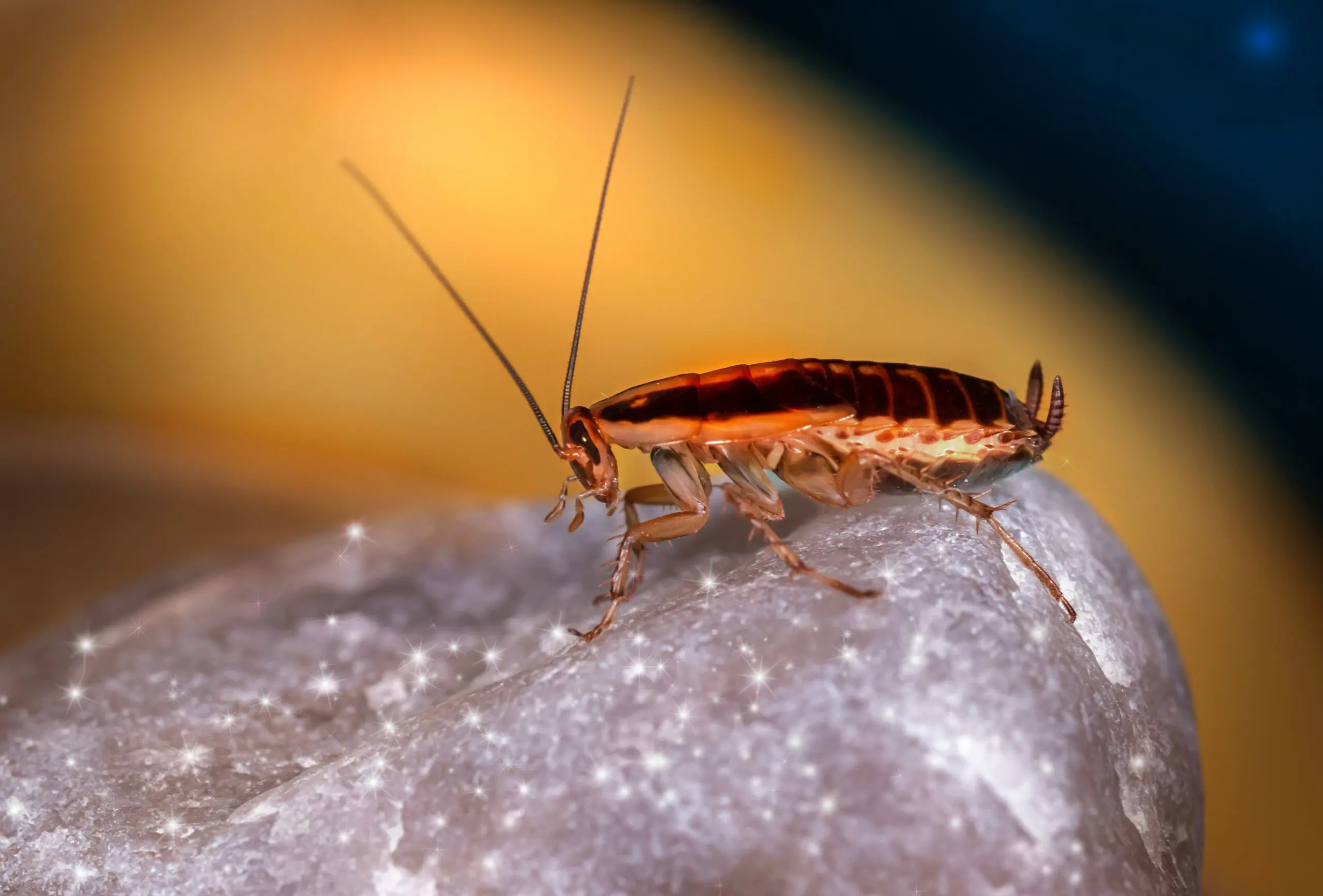
German Cockroaches are the most common species of cockroach in America, and according to entomologists at the University of Florida, they are “the species that gives all other cockroaches a bad name.” Adults grow to be about 13 to 16 mm in length, with six spined legs and long, nearly-straight antennae. They are light brown or tan in color with horizontal black stripes on their pronotum. Nymphs have the two stripes as well, but their bodies are very dark in color, almost black. This species does have wings, but they rarely fly.
These cockroaches are able to live outdoors in tropical conditions, but they prefer to live indoors. They can be found in warmer, more humid areas of a home or business, like kitchens and bathrooms. They will, however, move to other areas of a building that can provide food and water.
Outdoor Cockroaches
American Cockroach
Adult American Cockroaches can grow to be a whopping 3 inches long. They are reddish-brown or mahogany in color, and their pronotum is outlined with a band of yellow. They prefer temperatures between 70 and 80 degrees Fahrenheit. In southern states, they like to live in humid, shady places like flower beds. If they move indoors, they gravitate towards humid areas, but they are able to survive dry conditions if they have a food and water source available. Some common indoor areas to find American Cockroaches include food-prep areas, boiler rooms, steam tunnels, and basements. Both the males and females of this species have wings and are able to glide short distances. For more details about how American roaches glide and invade attics, see our guide to flying roaches in Florida.
Australian Cockroach
Australian Cockroaches, also called shad roaches, look similar to American Cockroaches but they are smaller, only growing to be about 1.25 inches long. They are reddish-brown to dark brown in color, and they have yellow markings on their heads as well as the front edges of each of their wings. Their wings are between 1.25 and 1.5 inches long. Their favorite places to live include firewood piles, tree bark, greenhouses, drains, toilets, and water pipes.
Florida Woods Cockroach
Although the name “palmetto bug” may refer to any large cockroach species, the Florida Woods Cockroach is the true palmetto bug. They are roughly 1.5 inches long and one inch wide. They are reddish-brown to black in color. Like many cockroach species, its wings are not fully developed, causing it to look wingless. They can be found in dark, damp places that offer a large food supply, including leaf piles, palmetto leaves, trees, firewood piles, leaky pipes, basements, and bathrooms.
Smokybrown Cockroach
Adult Smokybrown Cockroaches can grow up to 38 mm long. They are shiny and black or mahogany in color. Early nymphal stages have a white stripe on their thorax and the tips of their antennae. Later nymphal stages are colored similarly to adults. Their antennae are curved, and they have spined legs. Their long wings extend beyond their bodies, and they are strong flyers. This species is prone to dehydration, so they need to live in very moist areas. They prefer warm, protected places like gardens, greenhouses, nurseries, and tree holes. They often hide in mulch and leaf litter, where their coloration allows them to remain camouflaged from predators. They are also commonly found around eaves, soffits, gutters, and other high-moisture areas. When indoors, they breed in attics, which can allow their populations to grow unchecked. Smokybrown roaches are strong fliers—see why this makes them harder to control.
Oriental Cockroach
The Oriental Cockroach, often referred to as a "water bug" or Florida water roach, is another significant pest in the region. This species is darker in color, usually black or dark brown, and grows up to 32 mm in length. They are known for their affinity for damp environments, frequently found in basements, sewers, and under sinks. Unlike other Florida cockroach types, Oriental Cockroaches are slow-moving and less likely to be seen in daylight. Despite their preference for water, they can survive in drier conditions if food is plentiful. These roaches are notorious for their strong, unpleasant odor and are often considered one of the filthiest roach species in Florida.
For a complete guide to all cockroach species in Florida (not just flying types), see our comprehensive cockroach types guide.
Why Florida Has So Many Roaches
Florida's cockroach problem isn't accidental—it's environmental. Several factors make Florida the ideal habitat for cockroach species found nowhere else in the United States:
Climate: Year-round temperatures between 70-85°F mean roaches remain active 12 months a year, breeding continuously. Most other states see populations crash in winter.
Humidity: Florida's subtropical moisture levels (60-80% humidity) match exactly what cockroaches need to survive. Unlike northern states, there's no dry season to naturally control populations.
Vegetation: Dense landscaping, mulch beds, and tropical plants provide shelter and food sources. Property developers often create ideal roach habitats without realizing it.
Water Sources: Retention ponds, sprinkler systems, and the state's high water table mean standing water is always available for drinking and breeding.
Port Activity: Florida's major ports (Miami, Jacksonville, Tampa) introduce cockroach species from around the world through shipping containers and cargo.
This combination means cockroaches in Florida don't just survive—they thrive. What might be controlled in other states becomes an ongoing management issue here.
Common Questions About Florida Cockroaches
Q: Which cockroach is most common in Florida homes?
A: German cockroaches are the most common indoor species, but American and Australian roaches are also frequent invaders.
Q: Can Florida cockroaches fly?
A: Some species can (American, Asian, Australian, Smokybrown), while others cannot (German, Oriental, Florida Woods). Even "flying" roaches usually glide rather than truly fly.
Q: Are cockroaches in Florida worse than other states?
Yes. Florida's year-round warmth means continuous breeding cycles, so infestations develop faster and are harder to control without professional help.
Q: How do I know if I have a cockroach infestation?
A: Signs include droppings (look like coffee grounds), musty odors, shed skins, and actual sightings. Daytime sightings indicate a serious infestation.
Q: Can I get rid of cockroaches myself?
A: Small problems sometimes respond to DIY approaches, but Florida's climate means populations bounce back quickly. Professional service is most reliable.
Dealing with Florida Cockroach Infestations
With the many different types of cockroaches in Florida, it's crucial to identify the specific cockroach types in Florida infesting your property. Whether you're dealing with the small but persistent German Cockroach or the large, intimidating American Cockroach, knowing the kinds of cockroaches in Florida can help in choosing the most effective control methods.
If you're seeing any of these cockroach types in your home or business, don't wait for an infestation to spiral. Excel Pest Services offers professional cockroach control with year-round coverage. Our Home Protection Plan includes regular treatments designed for Florida's roach species and climate.
Call 754-802-3970 for a free inspection today!